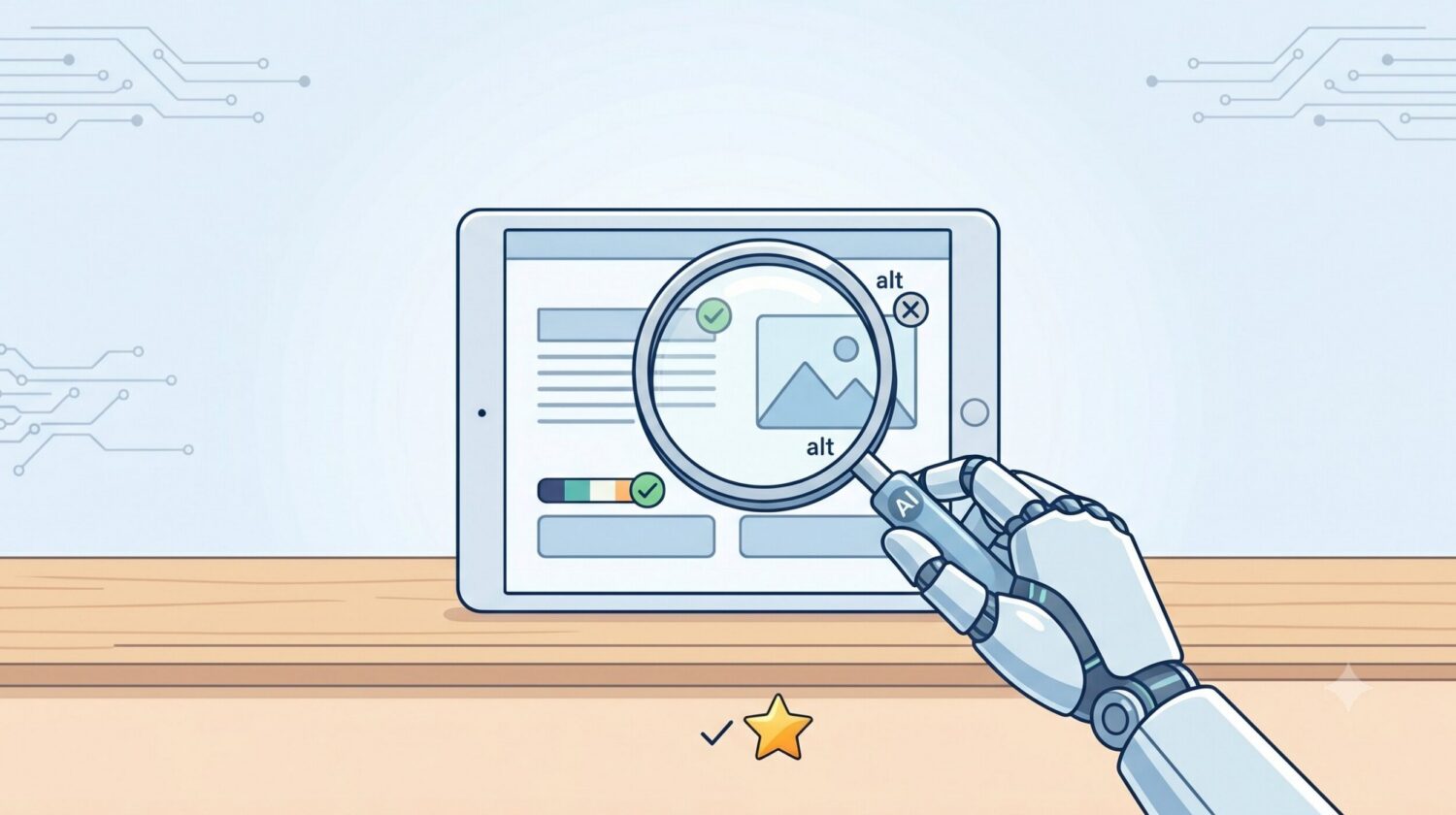
Artificial intelligence is increasingly part of how digital services are designed and built. It is now common to see AI-powered features in content management systems, design tools and accessibility checkers.
It can certainly help. But when it comes to web accessibility, it is important to be clear about what these tools can and cannot do.
Accessibility is about people being able to use digital services independently and confidently. That requires more than automation.
Where automated tools can help
Automated accessibility tools are useful for identifying obvious technical issues. They can quickly scan pages and highlight problems such as:
- Missing alternative text on images
- Poor colour contrast
- Unlabelled form fields
- Basic WCAG failures
- Media content without captions or transcripts
For large websites or complex digital platforms, this kind of scanning can save time and help teams prioritise fixes. It provides a helpful starting point and can act as an early warning system during development.
What automation cannot judge
Accessibility is not just about meeting technical criteria. It is about whether real people can actually use a service.
Automated tools cannot reliably assess:
- Whether the alternative text is meaningful and helpful
- Whether a keyboard journey feels logical and intuitive
- Whether interactive elements behave predictably with screen readers
- Whether instructions are clear for users with cognitive impairments
- Whether the overall experience feels straightforward or frustrating
Many significant accessibility barriers are not visible in a simple scan. They only become apparent when someone navigates the service using assistive technology or without a mouse.
This is why accessibility cannot be reduced to a checklist.
The role of human testing
Manual testing remains essential.
Testing with assistive technologies such as screen readers, voice control software, and keyboard-only navigation reveals how a service performs in practice. It highlights usability issues that automated tools miss and provides a clearer understanding of real-world experience.
This approach moves organisations beyond technical compliance and towards genuinely inclusive design.
Passing a scan does not guarantee accessibility. Ensuring people can complete tasks successfully does.
Taking a balanced approach
The most effective accessibility strategies combine automation with expert review.
A practical approach often includes:
- Automated scans to catch common issues early
- Detailed accessibility audits aligned with WCAG 2.2 AA
- Clear remediation guidance for development teams
- Ongoing reviews as content and functionality evolve
Accessibility is not a one-off exercise. It is an ongoing responsibility, particularly for public-facing and regulated organisations.
Technology can support the process, but inclusive outcomes depend on human insight, experience and testing.
How we can help
Improving accessibility is most effective when approached proactively.
Whether you are reviewing an existing website or planning a new service, we provide:
- Accessibility audits
- WCAG 2.2 compliance assessments up to the AAA standard/level
- Practical remediation guidance
- Ongoing accessibility support
If you would like to discuss your accessibility goals, we would be happy to help.
Disclaimer: In the spirit of embracing AI and exploring its creative potential, both this article and the accompanying image were generated with the assistance of AI tools.